
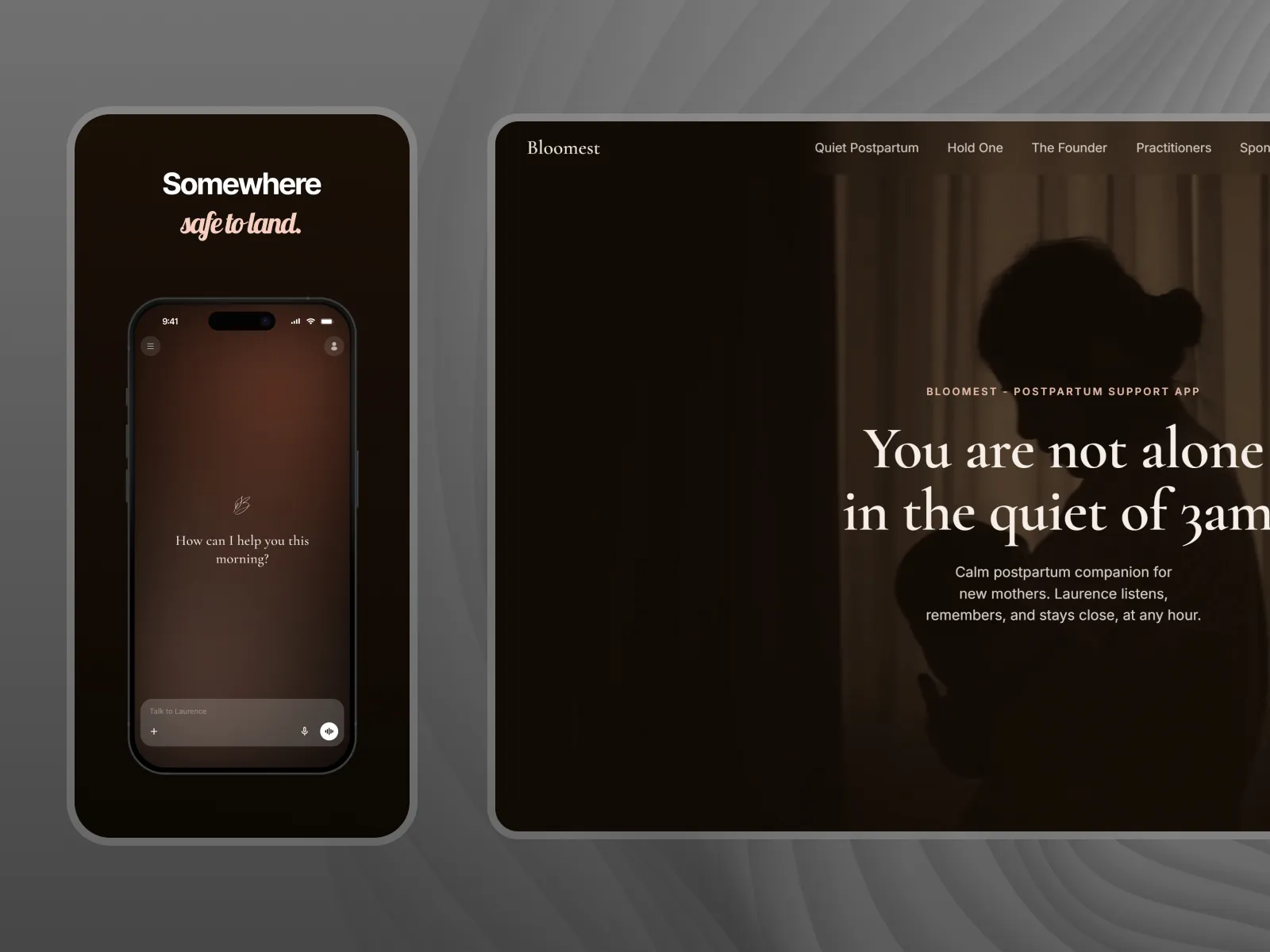
Bloomest
A postpartum companion app for new mothers, built around a voice presence rather than a tracker. Available on iOS and Android in 30 languages.
Canada
Most mobile projects do not fail because of the code. They fail because nobody decided what the app was for, and the scope grew until the release date stopped meaning anything.
We start by cutting. Before we write a line, we agree on the one thing the app has to do well in version one, and we design the release around that. Everything else goes on a list for later, and the list is real: we keep it, we revisit it, and we ship against it.
Every app we ship is built on the same spine, whatever the platform.
Offline is the default assumption. Connectivity is not a given, and an app that only works on strong wifi is a demo. We design the data layer so the app stays useful on a bad connection and reconciles cleanly when the signal comes back.
Performance is a feature with a number attached. Cold start, scroll smoothness, and time-to-first-meaningful-screen are tracked from the first sprint, not profiled in a panic the week before launch.
Releases are boring. Continuous integration, signed builds, staged rollout, crash reporting wired up before launch day. When something breaks in production, we know before your users tell you.
A codebase your team can read, with the architectural decisions written down and the reasoning preserved. A build pipeline that anyone can run. Store listings that are already live. And an app whose behaviour under bad conditions has actually been tested, not assumed.
It depends on what the app does. If the product leans on camera, sensors, background processing, or platform-specific interface conventions, native pays for itself. If it is mostly screens over an API and you want one team shipping to both platforms, React Native or Flutter will get you there faster and cheaper. We make that call with you in the first week, in writing, with the trade-offs spelled out.
A focused first release is typically three to five months from kickoff to store submission. Larger products with payments, real-time features, or multiple user roles run six to nine months. We work in two-week sprints and you get a build you can install on your own device from the third week onward.
Yes. We set up the developer accounts, prepare the store listings, handle review feedback, and manage phased rollouts. Rejections happen to everyone; we deal with them rather than handing you a checklist.
Often, yes. We start with a paid technical audit: we read the codebase, run it, and give you an honest assessment of what is salvageable and what is not. Sometimes the answer is a rewrite, and we will say so.
Most of our work is for clients outside Rwanda. We are based in Kigali and work across European, North American, and East African time zones, with overlap hours agreed at the start of the engagement.
Related work
A postpartum companion app for new mothers, built around a voice presence rather than a tracker. Available on iOS and Android in 30 languages.
Canada
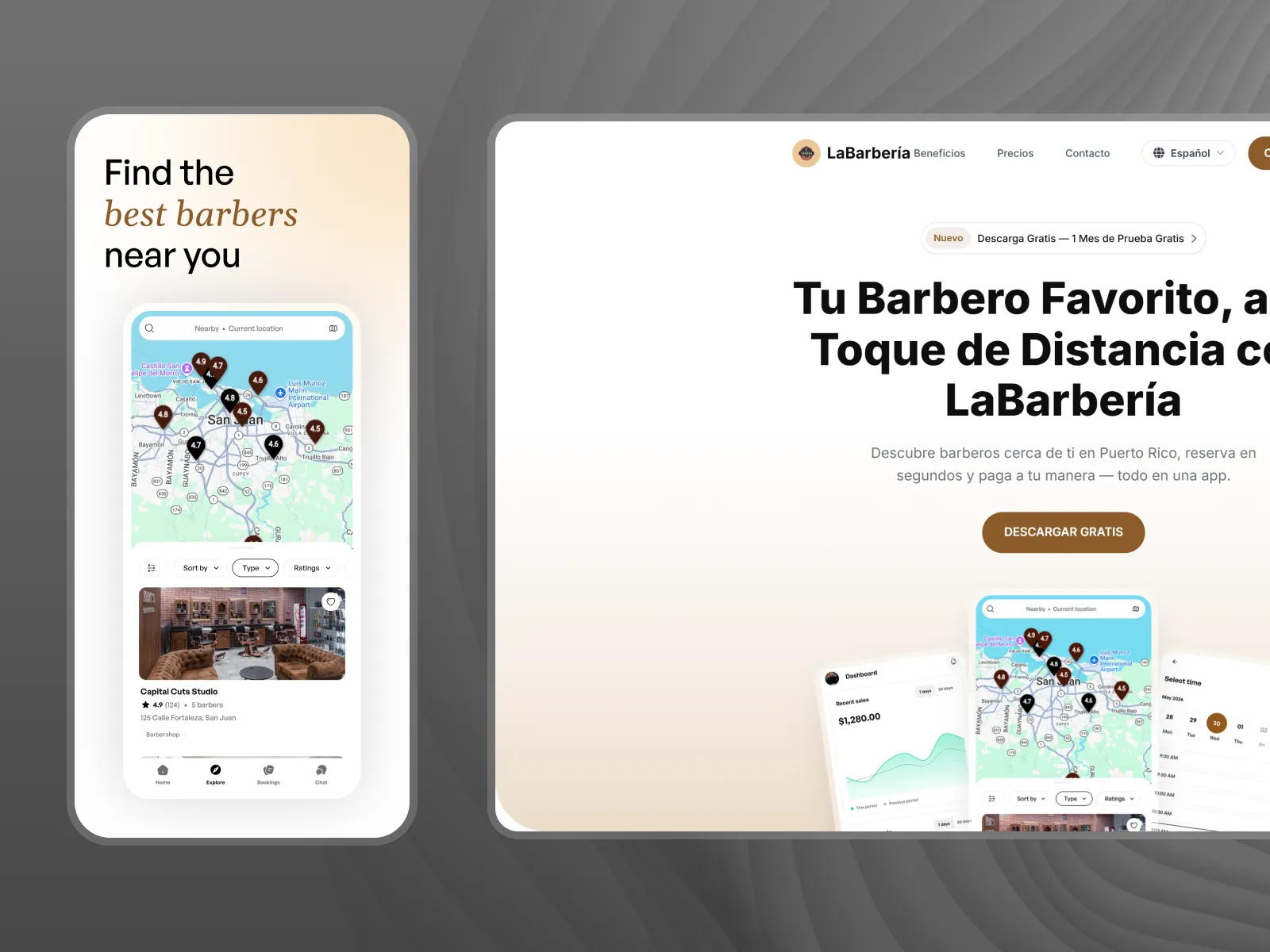
A two-sided booking marketplace for barbers in Puerto Rico, with real-time availability, direct payouts, and a $1 booking fee instead of a commission.
Puerto Rico
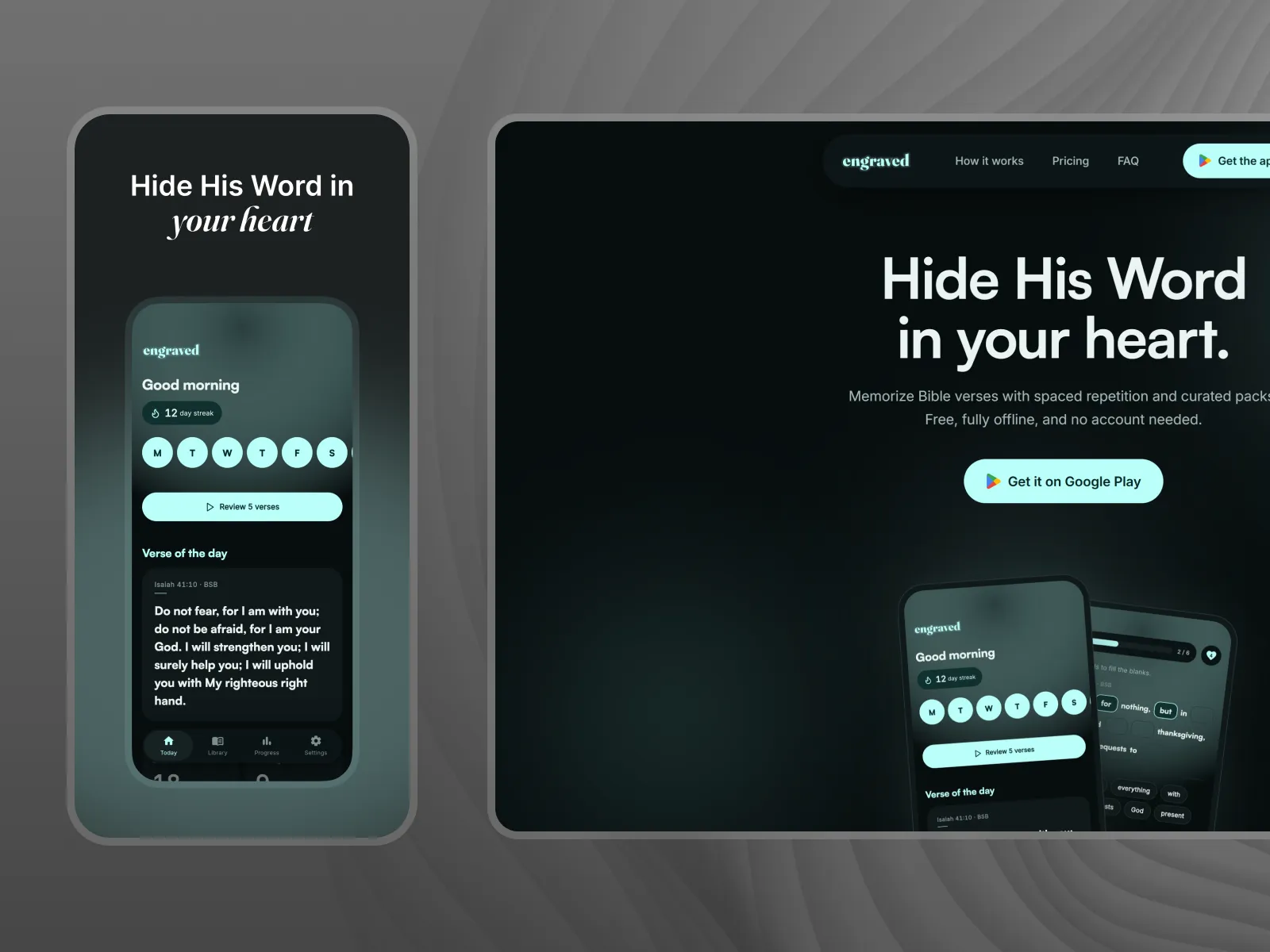
A Bible memorisation app built on spaced repetition. Fully offline, no account, three public-domain translations.
Rwanda
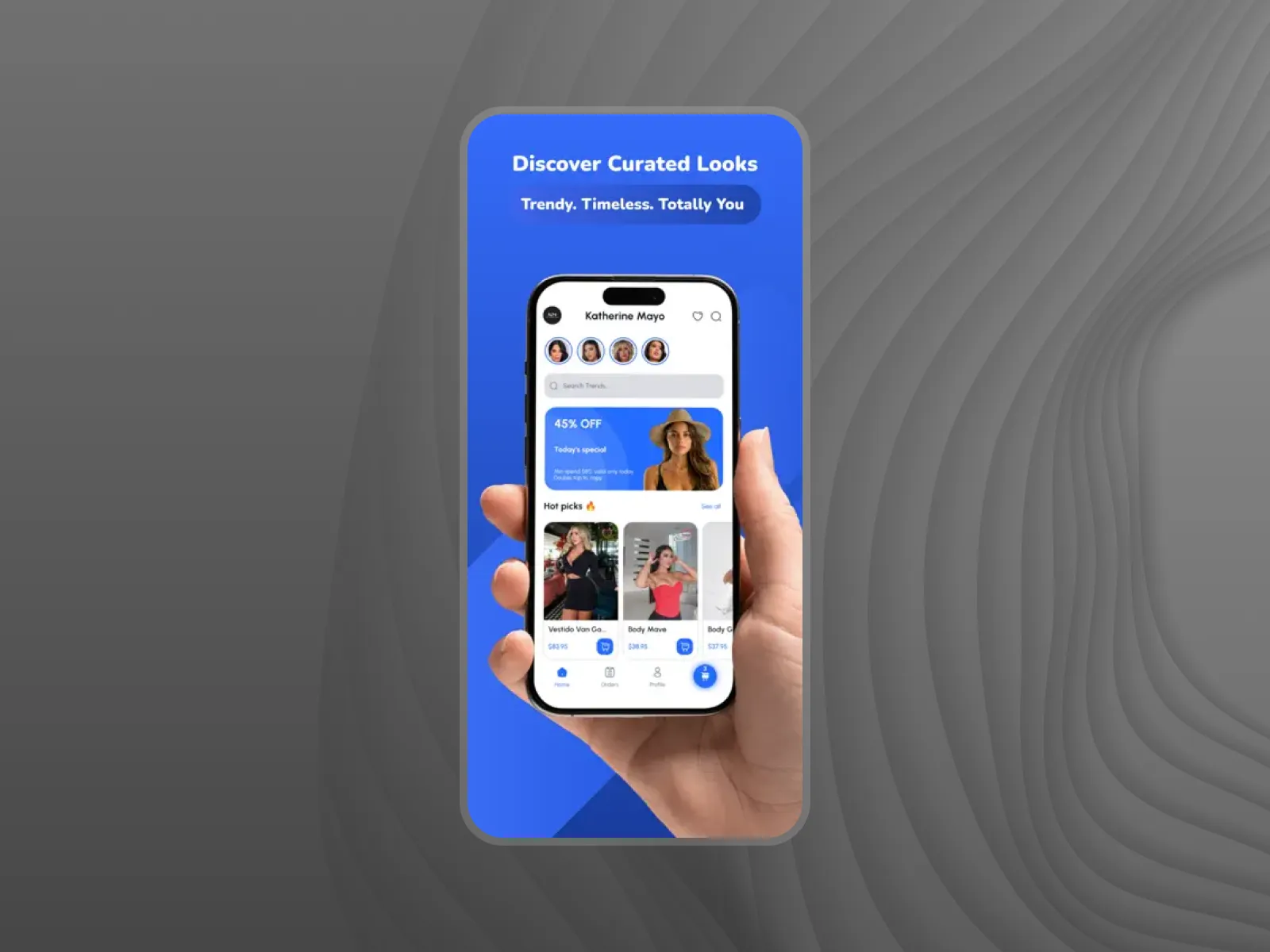
A bilingual iOS shopping app for a womenswear label, with daily drops, wishlist and order tracking.
Colombia
Tell us what you're working on. We'll tell you how we'd make it real.
Start a project